Reading Recap

In light of COVID-19, students in Professor Nyland’s ENG-325-OME1 and ENG-335-OME1 classes wrote and presented original works on the topic of isolation. I am glad to say that I feel that my efforts on my performance piece I, Neutrino paid off, thank goodness. Quarks always bond to make protons, neutrons, and electrons, while neutrinos exist on their own. This difference between quarks and neutrinos inspired me to write a story of a girl grappling with her recently-prescribed isolation. I uploaded the transcript of I, Neutrino, a few sentences of context, and an astronomically-appealing photograph to my webpage. Recording I, Neutrino, I used a flashlight to provide an eerie storytelling atmosphere, and I feel that my efforts in said recording paid off, thank goodness. My classmates’ work showcased a veritable kaleidoscope of storytelling venues, from nigh-professional filmmaking (Ralph Black’s The Curse of Immortality) to organic storytelling (Hunter Bunting’s The Last Figley); whatever venues they chose, my classmates’ work was resplendent and I am very honored and privileged to be in a class with so many talented individuals. What stood out to me was the multifaceted ways I can now see people viewing pandemic-related isolation, as well as the sheer talent that my classmates’ individual webpages hummed with. Taken together or as individuals, my classmates in ENG-325-OME1 and ENG-335-OME1 have magnificent imaginations. The next time around, depending on the theme or time of year, I might keep or forgo the eerie flashlight-effect, I might alternate between camera angles in order to take my narrated story to film caliber, I might add music to suit individual paragraphs’ moods, and I might alter the lighting depending on what path the story’s mood takes. It would be a privilege and honor to get the opportunity to participate in another reading, and an open mic event could prove a very entertaining venue indeed. Depending on what theme an open mic night chooses to open with, the stories could become comedy routines destined to be classics, horror stories to tingle the next century’s spines, poetry that goes toe-to-toe with Edgar Allan Poe, and much, much more. The sky is the limit.

Setting

I think about my stories’ setting often, and I normally tend to deal with Setting/World in my stories via scattering hopefully-pertinent clues around the plotline. However, after reading Mary Buckham’s How Writers Can Craft an Effective Setting, I better understand how, even though the picture in my head may be crystal-clear, it may not be as clear in the reader’s mind through ink letters on paper. This is particularly true if the reader must resort to attempt filling the gaps on her/his own—as Buckham writes “The reader will be mentally asking these questions, and the longer you keep the information from them, the less they will focus on what you want them to focus on. The reader will become removed from the story and the characters, and instead be trying to figure out the where, when, who, or why.” (Buckham, 2016)

I will do my best to follow Buckham’s advice in this paragraph, and it will hopefully help the story at large by grounding the reader in a concrete location and leaving just enough to the imagination: I yanked the elastic out and shook out my dark-brown sticks to aerate in the Rhode Island leftover-summer air before tying them back into a bunch that practiced acupuncture on my thoracic vertebrae. Dear reader, you know that feeling when it’s the first day of middle school and it’s perfect beach weather? Yeah, I hate the evil incongruence too, don’t worry. If a magic lamp materialized before me, I’d say this: I, Sarah Wyatt, of sound mind and body, hereby wish to exchange this pile of bricks called “New Haven Secondary” into Newport Beach! Rolling my eyes, I trudged my tall, bulky (read: non-obese) body into the execution chamber. A voice in my head informed me that this may be the year the homework monster chews me up and spits me out, but I prayed the HW monster would choke on me, then marched into the brick-and-mortar will all the relish I could muster. My friend Katie Roberts, tanned like summer-baked bread, waited for me catch up. Maybe there’d be pizza as a 1st-day-of-school lunch special…

Reference List:

Buckham, M. (2016, January 14). How Writers Can Craft an Effective Setting. Jane Friedman. https://www.janefriedman.com/effective-setting/

Prose and Sparks

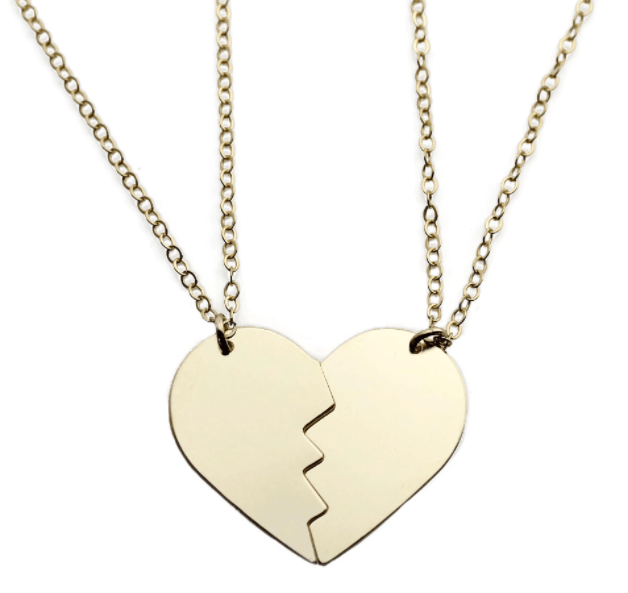
Francine Prose said “I’ve always found that the better the book I’m reading, the smarter I feel, or, at least, the more able I am to imagine that I might, someday, become smarter” (Prose, 9). This is very important for every reader to maintain as a fundamental truth of reading, because the very fact that one holds and reads the book means s/he—the reader—is smart, and/or can and will become smarter. S/he is enough. My favorite of the three Amber Sparks stories I read was And the World Was Crowded with Things That Meant Love, because it showcases a long-distance relationship that was not long-distance at all; both lovers bonded over their love of travel, and always had each other in mind, even when on opposite sides of Planet Earth. I liked the line “He caught her yawning while a blonde in pigtails murdered The Blue Danube, and they exchanged grins” (Sparks, 59), because it provides a proverbial interpretive “fork in the road”: “murder” in the performance connotation can be for better or for worse. Depending on which path The Blue Danube took here, the two lovers could smile at each other in agreement over how majestically the “blonde in pigtails” performed, or how thoroughly she butchered the piece. Whatever about the performance they agreed on was enough for them to progress, because “[after] drinks and dinner they were delighted to find they shared a hobby: both were sculptors of sorts, though she worked in clay and he worked in wood. Both had jobs that sent them round the world, and it was a way to kill the long, late hours that haunt the solitary traveler” (Sparks, 59). “A locket severed and the halves hung round the neck of the world they would cross many times over the years, always looking for one another” (Sparks, 59) is not only a nod to the lovers’ artistry but also a poetically-eloquent way to describe a blossoming long-distance love. I was also fond of the passage “The pigtailed pianist. A drawer at the nape of her neck, with a little heart inside. A paper heart, coin-sized and inked in scarlet. He kept it in his pocket until it fell to pieces” (Sparks, 60) because it demonstrates that, whether they thought the girl’s performance was awful or magnificent, they owe her a debt of gratitude for helping them find each other. “No one on the hotel staff could tell if the hand was giving or receiving—or if it was beckoning something or someone to finally come home” is a poetic sendoff, because perhaps the wood-sculptor sensed that the clay-sculptor died hundreds of miles away, so he carved a wooden likeness of her hand, either to hold in his own hand or to strangle himself, so they could, even in some small way, ascend to heaven together. Poetic eloquence and dual interpretations seem to identify Amber Sparks’s work.

Reference List:

Prose, F. (2007). Reading Like a Writer. HarperCollins Publishers. Sparks, A. (2016). The Unfinished World: And Other Stories. Liveright Publishing Corporation.

Review: The Urg

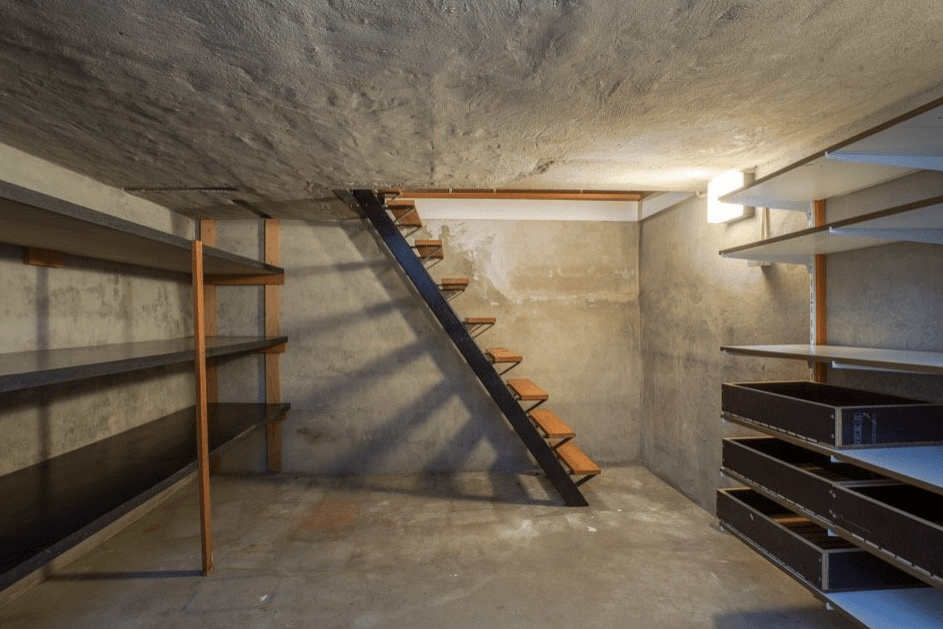
Constance Renfrow’s The Urg was worthy of the 2019 Best of the Net prize because of its raw realism—“We were nine, and Carrie and I had sworn to be best friends forever, an oath we marked by spending most afternoons at her house, […] The Burkes had the more exciting property, the better snacks, and also a pool. […] The refrain I would mishear for years: Kiss me baby one more time. […] Jenn looking like she’d merged with the doorframe, her long pink towel the same shade as the paint and her cheeks. […] I thought of Jenn, then and now, as the prettiest real[-]life person I’d ever seen; she knew how to French braid hair and glide down the precariously steep driveway on rollerblades. And, when we were really little, she’d give me and Carrie piggyback rides all over the house, bouncing us from wall to distant wall. […] I was always ravenous by the time Carrie and I, our best friendship discarded, nodded goodbye at the cul-de-sac bus stop. […] He’d started Weight Watchers over the summer […] Three little red numbers, which, when spoken aloud, I thought [my parents would] find admirable. ‘If you could be any age for all time, what would it be?’ […] boulders on the hill arranged like a stage and seating. […] Jenn slapped her hand against the side of the pool, gasping, ‘Forty.’” (Renfrow, Porter House Review), brilliant verbiage—“forming two pigtails as impermanent as the girls dancing across the screen. […] Jenn monopolizing the bathroom, […] the warm damp of the terrycloth brushing my cheek as I passed. […] noodles coiled around my fork, thin and waterlogged. […] kicked off his shoes, and padded to the fridge. The seal gasped open, […] muscles contorted at grotesque angles. […] When I stood and threw the arrow[,] the skeleton did seem lighter, almost satin-like, as though some great weight had suddenly risen”, and calling attention to the timely topic of body image—”sliding his hand down the slight curve of his stomach […] He’d started Weight Watchers over the summer […] Three little red numbers, which, when spoken aloud, I thought [my parents would] find admirable. […] ‘Yeah, well, we can’t all be stick figures like you.’ […] My mom at twenty-four weighed less than me at fourteen. […] ‘Just light-headed,’ she mumbled. ‘I’m fine, Mom. I’ll be okay.’ There would be other collapses, other spells that wouldn’t be blamed on hot water, low iron. […] ‘Please don’t let what happened to Jenn Burke happen to you’” (Renfrow, Porter House Review), and the ever-present Urg, cleverly intertwined with the plot—“The Urg took over Carrie’s basement that same summer Britney Spears took over the airwaves. […] New and fresh and no place for monsters to hide. […] the Urg starved and wheezed, shuddered and heave.” (Renfrow, Porter House Review) Perhaps the Urg referred the grumbling of an undernourished alimentary canal. The amount of nuance that Renfrow takes the time to include is beautiful, because it lets the reader close her/his eyes while reading and have a scene set for her/him to puzzle together in the mind’s eye.

Reference List:

Renfrow, C. (February 25). The Urg. Porter House Review. Retrieved September 10, 2020, from https://porterhousereview.org/articles/the-urg-by-constance-renfrow/